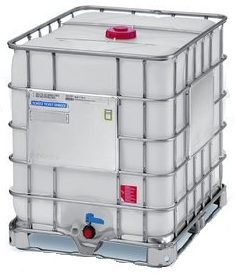
Intermediate Bulk Containers (IBCs) are essential in industries that handle bulk liquids — from food and beverage to chemicals, agriculture, and manufacturing. At the heart of every IBC is the drain valve, a component that controls discharge, ensures safety, and determines how easily your liquid flows. Choosing the right valve type can improve handling, reduce leaks, and optimize compatibility with pumps, hoses, or discharge systems
Here’s a breakdown of the three main types of drain valves you’ll encounter on IBC totes — what they are, how they work, and when to use them.
🔄 1. Ball Valves — The Most Common Choice
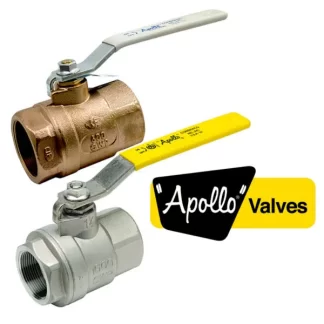
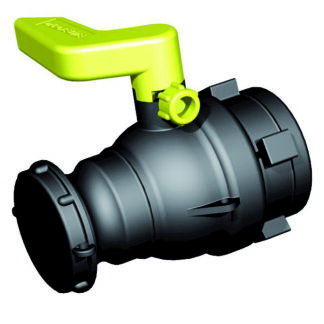
Ball valves are the workhorses of IBC drain systems. These valves use a rotating ball with a hole through the center that aligns with the flow path when open and blocks it when closed.
Why choose a ball valve?
- Reliable sealing: Provides a tight shut off with minimal leakage.
- Easy operation: A simple quarter turn handle opens or closes the valve quickly.
- Versatile: Works well for a broad range of liquids — water, chemicals, food products, and more.
Typical applications:
- General liquid discharge
- Attachment to hoses or transfer lines
- Drainage of storage tanks or processing systems
Product examples:
-

Apollo Lead Free Bronze Ball Valve MADE IN USA
$ 36.08 – $ 1,533.00Price range: $ 36.08 through $ 1,533.00 Select options This product has multiple variants. The options may be chosen on the product page -
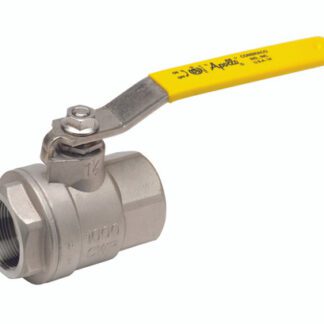
Apollo 76F Series Full Port Stainless Steel Ball Valves MADE IN USA
$ 53.90 – $ 955.24Price range: $ 53.90 through $ 955.24 Select options This product has multiple variants. The options may be chosen on the product page -
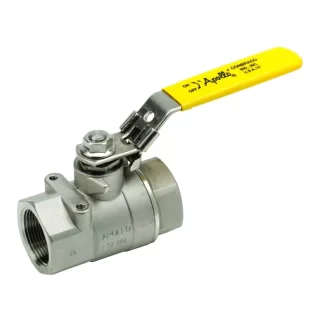
Apollo 76 Series Standard Port Stainless Steel Ball Valves MADE IN USA
$ 96.03 – $ 1,887.60Price range: $ 96.03 through $ 1,887.60 Select options This product has multiple variants. The options may be chosen on the product page
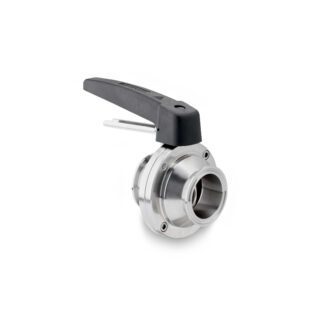
🎛️ 2. Butterfly Valves — Fast, Simple Flow Control
Butterfly valves feature a disc mounted on a rotating shaft that turns perpendicular or parallel to flow to open or close the path. These are often found on larger or industrial IBC totes.
Key benefits of butterfly valves:
- Quick operation: A quarter turn opens or closes the valve easily.
- Lightweight and compact: Less bulky than some alternatives.
- Low pressure drop: Good for applications needing high flow rates.
Typical applications:
- General liquid discharge
- Attachment to hoses or transfer lines
- Drainage of storage tanks or processing systems
Product suggestion:
-

Tassalini Tri Clamp Butterfly Valves in 304 Stainless Steel
$ 137.51 – $ 440.06Price range: $ 137.51 through $ 440.06 Select options This product has multiple variants. The options may be chosen on the product page
🔐 3. Specialty and Auxiliary Valve Types
While ball and butterfly valves dominate the IBC world, other valve types are useful in specific situations:
🌡️ Diaphragm Valves
Used where better sealing and precision are required, especially for viscous or aggressive fluids. The valve opens and closes by flexing a diaphragm against a seat. They are less common on standard IBCs but valuable in chemical and pharmaceutical applications.
🧪 Tap & Pull Plug Valves
Simpler and cheaper valve styles seen on smaller tanks or accessories. These allow basic flow control but don’t provide the same durability or flow capacity as ball or butterfly valves.
Note: For most customers replacing or upgrading an IBC tote drain, sticking with a ball or butterfly valve is the simplest and most reliable choice.
🧠 Quick Comparison
| Valve Type | Operation | Pros | Best For |
|---|---|---|---|
| Ball Valve | Rotating ball | Tight shut‑off, versatile | General discharge & fittings |
| Butterfly Valve | Rotating disc | Quick, high flow, lightweight | Large totes, industrial use |
| Diaphragm Valve | Flexible diaphragm | Precise control, corrosion resistance | Chemicals, aggressive liquids |
🛠️ How to Choose the Right Valve
When selecting an IBC drain valve:
- Know your thread type (S60x6, NPT, etc.) — this determines what valve connects to your tote.
- Match flow needs to valve function — ball valves for general use, butterfly for higher volumes.
- Consider materials — plastics for chemical resistance, metal collars for durability.
- Plan for sealing — most valve installations use gaskets or seals to prevent leaks.
For help identifying your thread or finding compatible fittings, check out our guide on IBC threads — How to Identify the Threads on Your IBC Tote Valve.