IBC Tote Maintenance & Troubleshooting
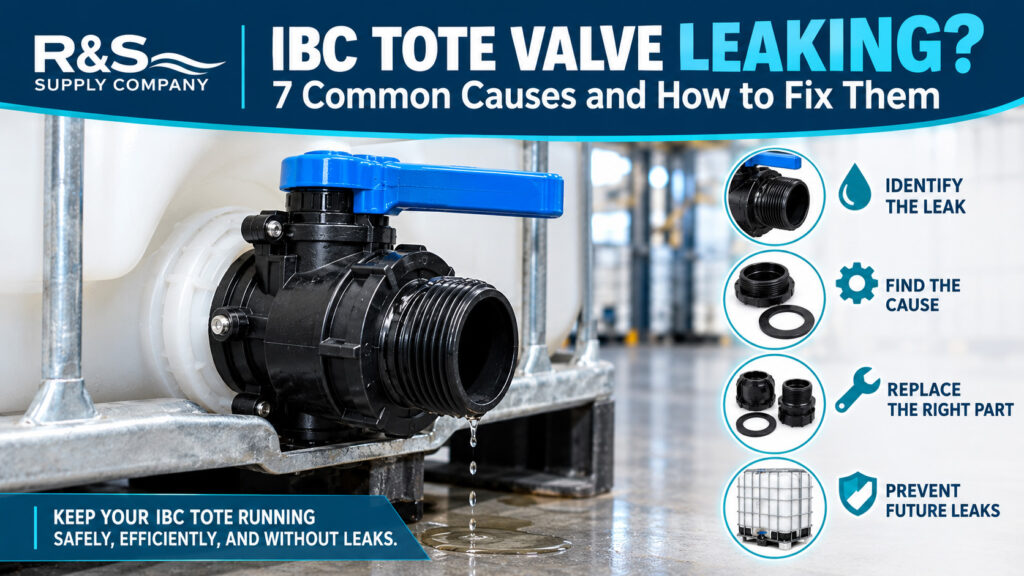
A leaking IBC tote valve can quickly become a frustrating problem. Whether you're storing water, transferring agricultural liquids, or handling materials in an industrial facility, even a small leak can lead to wasted product, messy work areas, and unexpected downtime.
The good news is that not every leak means the entire valve needs to be replaced. Sometimes, the problem is a damaged outlet gasket, an incorrectly fitted cap, or an adapter that doesn't match the valve's threads.
Other problems, such as a cracked valve body or a damaged tank-to-valve connection, require more careful attention.
The key is identifying exactly where the leak is coming from before deciding what to replace.
In this guide, we'll cover seven common causes of IBC tote valve leaks, how to recognize them, and what to do next. We'll also explain when a replacement accessory may solve the problem and when it's safer to consult the IBC manufacturer or a qualified service provider.
Why Is My IBC Tote Valve Leaking?
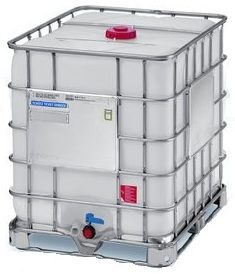
IBC totes, also known as intermediate bulk containers, are designed to store and transport liquids in a variety of commercial and industrial applications.
Many feature a bottom discharge valve that allows operators to empty the container without opening the top.
Depending on the container and manufacturer, the discharge assembly may use a ball valve, butterfly valve, or another approved design.
Over time, connections and sealing components may become worn, damaged, or contaminated. Improperly matched fittings can also create leaks, even when the valve itself is functioning properly.
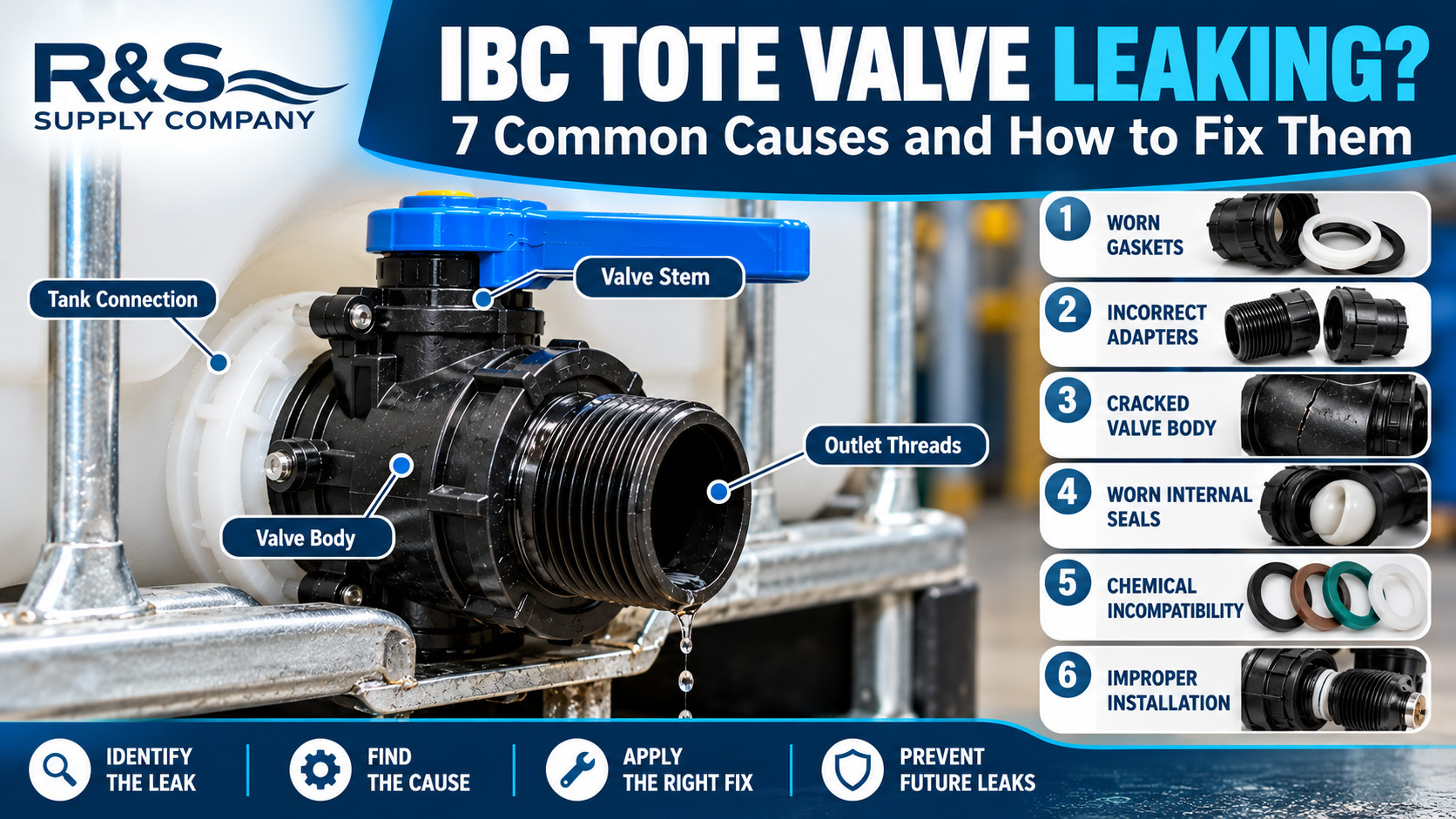
Common leak locations include:
- Discharge outlet cap or gasket
- Hose or threaded adapter connection
- Valve stem or handle area
- Valve body
- Connection between the valve and IBC bottle
Before attempting to correct a leak, it's important to determine which component is responsible.
First, Identify Where the Leak Is Coming From
The location of a leak often provides the best clue about its cause.
For example, liquid dripping from a hose adapter may indicate a connection or gasket problem. Liquid escaping around the valve handle may indicate a problem with the valve's stem seal.
A leak at the connection between the valve and the IBC bottle is more serious because it may involve the factory-installed discharge assembly.
IBC Tote Valve Leak Troubleshooting Chart
| Leak Location | Possible Cause | Recommended Action |
|---|---|---|
| Outlet cap | Missing, worn, or damaged gasket | Check cap and gasket specifications. |
| Hose or adapter | Incorrect threads or damaged seal | Verify adapter and sealing compatibility. |
| Valve stem or handle | Damaged stem seal or packing | Consult the manufacturer or a qualified service provider. |
| Valve body | Crack, impact damage, or deterioration | Stop using the affected assembly and arrange inspection. |
| Tank-to-valve connection | Damaged attachment or sealing surface | Seek manufacturer or qualified reconditioner guidance. |
| Outlet with valve closed | Internal seat leakage | Have the valve assessed under approved procedures. |
| Threaded outlet | Cross-threading or damaged threads | Inspect and replace compatible external accessories as appropriate. |
7 Common Causes of IBC Tote Valve Leaks
1. Worn, Damaged, or Missing Outlet Gaskets
One of the first things to check when an IBC tote leaks near its outlet is the gasket.
Gaskets create a seal between mating components, such as an outlet cap and the valve's discharge connection. Depending on the design, they may be made from EPDM, FKM, PTFE, or other materials.
Over time, gaskets can become compressed, cracked, swollen, or otherwise damaged. Exposure to incompatible chemicals may also cause them to lose their sealing properties.
Common signs of a gasket problem:
- Liquid appears around the outlet cap or fitting.
- The gasket is visibly cracked, flattened, or distorted.
- The cap fits correctly but does not seal as expected.
- Leakage occurs after an accessory has been removed and reinstalled.
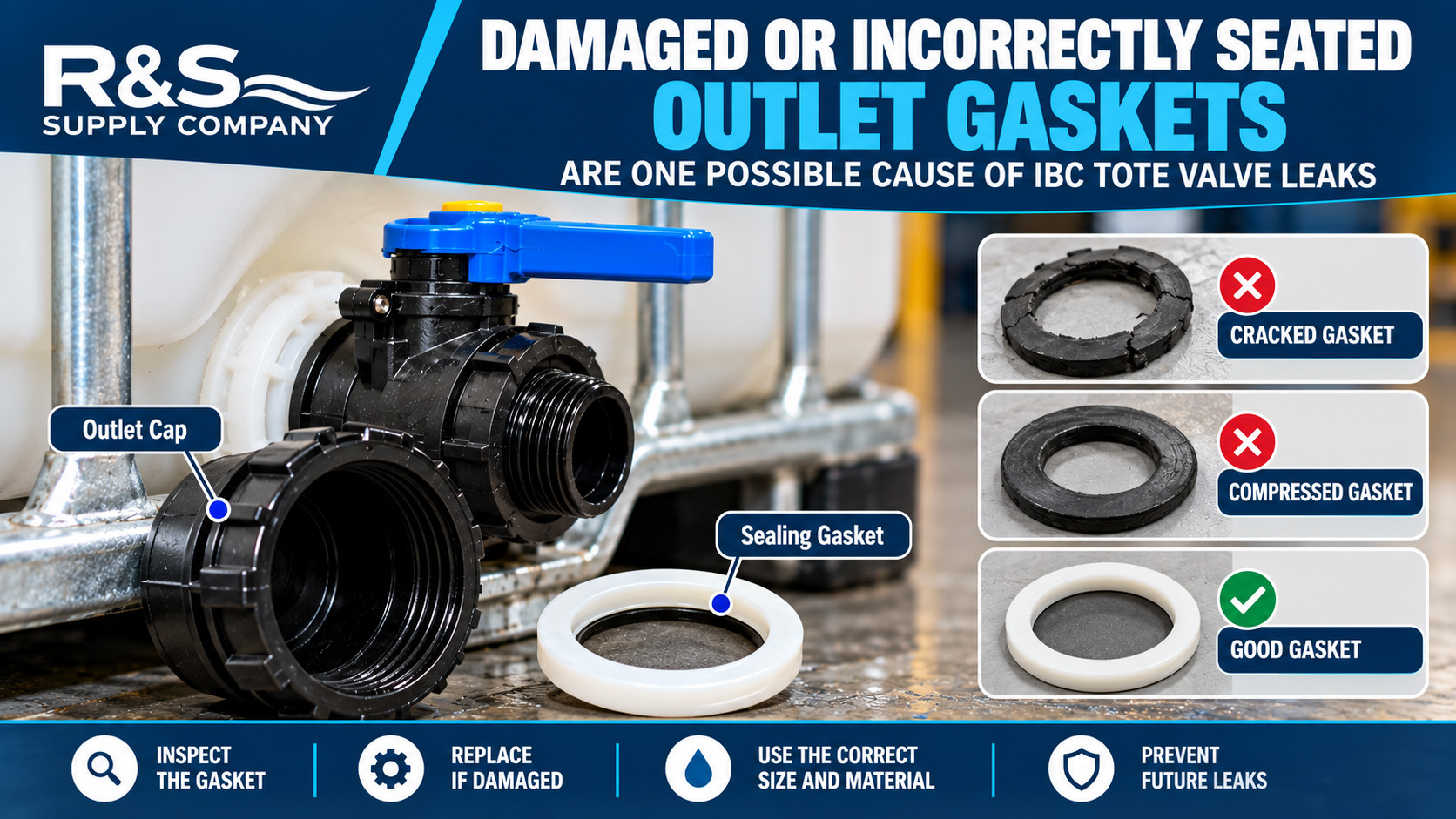
What to do: Once the container has been safely isolated and the connection can be inspected under the manufacturer's instructions, check the gasket for damage, correct placement, and material compatibility.
If the gasket is replaceable, use one with the correct dimensions and material specifications.
Avoid substituting an ordinary rubber washer simply because it appears to fit.
2. Loose or Incorrectly Fitted Outlet Caps
An outlet cap provides a secondary closure at the discharge end of many IBC valves.
A cap may leak if its gasket is missing, its threads do not match the outlet, or debris prevents the sealing surfaces from making proper contact.
For example, many IBC outlets use coarse S60x6 threads, while other outlets use finer pipe threads or different buttress-style connections.
A cap that appears to fit may still have an incompatible thread design.
What to do: Check the outlet connection type and the cap's specifications. Inspect for damaged threads, debris, and missing sealing components.
Replace damaged or incompatible accessories with properly matched parts.
Do not overtighten plastic caps to compensate for a poor fit. Excessive force can damage the connection and make the problem worse.
3. Cracked Valve Bodies or Damaged Threads
IBC tote valves are commonly positioned near the bottom of the container, where they can be exposed to accidental impact during handling.
Forklift contact, dropped equipment, improperly supported hoses, or excessive force on fittings may damage the valve body or outlet threads.
Cracks may also develop when materials deteriorate or are exposed to conditions outside their intended service limits.
A damaged valve body can create a direct leakage path that cannot be corrected simply by replacing an outlet cap.
What to do: If you notice cracks, deformation, or leakage through the valve housing, stop using the affected assembly and arrange for qualified inspection.
Do not rely on glue, epoxy, or makeshift patches to restore the integrity of a damaged valve.
For containers used in regulated transport, replacement and reconditioning must follow applicable requirements and the container manufacturer's approved procedures.
4. Worn Internal Valve Seats or Seals
Sometimes an IBC valve leaks through its discharge outlet even when the handle is fully closed.
This can indicate a problem with the internal sealing components.
In a ball valve, a rotating ball closes against valve seats to stop flow. In a butterfly valve, a rotating disc closes against the sealing surfaces.
If these components become damaged, worn, contaminated, or chemically degraded, the valve may no longer provide an effective shutoff.
This type of leakage is different from a leak around the outlet cap.
What to do: First determine whether liquid is passing through the closed valve or escaping from an external connection.
If internal valve leakage is suspected, consult the manufacturer or a qualified IBC service provider.
Do not assume the valve can be disassembled or repaired in place. Some IBC discharge valves are factory-installed components that require approved service procedures.
5. Incorrect Adapters or Mismatched Threads
IBC totes are often connected to garden hoses, pumps, cam-and-groove fittings, and other liquid-transfer equipment.
Adapters make these connections possible, but using the wrong adapter can cause leaks.
One common source of confusion is the difference between S60x6 and standard 2-inch pipe threads.
An S60x6 outlet has an approximate major diameter of 60 mm and a 6 mm thread pitch. A 2-inch NPT connection has a different thread profile and a much finer pitch.
Although their diameters may appear similar, these connections are not interchangeable.
What to do: Identify the outlet thread type before selecting an adapter.
Check the outside diameter, thread pitch, connection profile, and required sealing method.
A compatible adapter should engage correctly without being forced. Depending on its design, it may also require a specified gasket or sealing surface.
6. Chemical Incompatibility or Seal Deterioration
Not all valve materials and seals are suitable for every liquid.
An IBC tote used for water may have different compatibility requirements than one used for oils, cleaning solutions, agricultural chemicals, or industrial processing liquids.
Certain substances can cause elastomers to swell, harden, soften, or degrade. Plastics may also be affected by incompatible chemicals or operating conditions.
Common sealing and valve materials include:
| Material | General Characteristics |
|---|---|
| EPDM | Used in selected water-based and chemical applications; compatibility must be verified. |
| FKM | Used in certain oil and chemical applications; not suitable for every chemical. |
| PTFE | Offers broad chemical resistance but must still be evaluated for the specific service. |
| Polypropylene | Common valve body material with application-dependent chemical resistance. |
What to do: Verify the chemical compatibility of the valve body, seats, gaskets, and other wetted components.
Consult the chemical supplier's safety information and the component manufacturer's compatibility guidance.
For food and beverage applications, also verify the required food-contact suitability and sanitation requirements.
7. Improper Installation or Excessive Tightening
Even the correct cap or adapter can leak if it is installed incorrectly.
Common problems include cross-threading, displaced gaskets, damaged sealing surfaces, incompatible thread sealants, and excessive tightening.
Another overlooked issue is mechanical stress.
For example, a heavy hose assembly connected directly to an IBC valve may place unnecessary force on the outlet. Over time, this can damage connections or sealing components.
What to do: Follow the manufacturer's instructions for the specific accessory and connection.
Make sure the gasket is positioned correctly, the threads engage properly, and connected hoses are adequately supported.
Avoid forcing components together or applying more tightening force than specified.
Can You Fix a Leaking IBC Tote Valve?
The answer depends on which component is leaking and whether that component is designed to be replaced.
A damaged external accessory may be relatively simple to address once the system is safely isolated. A damaged factory-installed valve, however, is a different matter.
Problems That May Involve Replaceable Accessories
Some leaks can be traced to components attached to the valve's discharge outlet, including:
- Outlet caps with damaged or missing gaskets.
- Hose adapters with incompatible threads.
- Worn removable sealing washers.
- Damaged external fittings.
When these parts are designed to be removable, selecting a correctly sized replacement may resolve the connection problem.
For example, replacing a damaged outlet gasket with an approved component may restore the seal between the cap and valve outlet.
However, it's important to verify that the replacement material is compatible with the liquid and that the component is appropriate for the specific connection.
Problems That Require Professional Valve Service
Leaks involving the valve housing, stem, internal seats, or tank-side attachment may require specialized service.
According to Mauser Packaging Solutions' IBC closing instructions, its factory-installed valves are not intended to be replaced by the filler. Valve replacement should be performed by qualified IBC reconditioners using manufacturer-specified components.
This distinction is particularly important for IBC totes used to transport regulated hazardous materials.
If the valve itself is damaged, avoid attempting to repair the assembly using improvised seals, adhesives, or incompatible replacement components.
See the Mauser IBC Closing Instructions for manufacturer-specific guidance.
How to Prevent IBC Tote Valve Leaks
Routine inspections and proper handling can help reduce the risk of unexpected leaks.
1. Inspect the Valve Before Filling
Look for visible cracks, damaged threads, missing outlet caps, and signs of deterioration. If a component appears damaged, have it evaluated before filling the container.
2. Use the Correct Threaded Connections
Always identify the outlet thread type before connecting a hose or adapter. A fitting that appears close in size may still have an incompatible thread pitch or sealing arrangement.
3. Protect the Valve During Handling
Keep forklifts, pallets, and other equipment from striking the discharge assembly. Avoid dragging or moving a tote by pulling on the valve or attached hose.
4. Support Connected Hoses
Long or heavy hoses can place unnecessary mechanical stress on the valve outlet. Use appropriate hose supports and connections to reduce strain.
5. Check Gasket and Seal Compatibility
Verify that all wetted materials are suitable for the stored liquid and expected operating conditions. Do not assume that an accessory previously used with water is appropriate for industrial chemicals.
6. Follow Manufacturer Instructions
Manufacturers may specify particular closure procedures, inspection requirements, and approved replacement components. Use those instructions rather than applying generic tightening recommendations.
7. Inspect Containers Before Reuse
An IBC that has been previously used should be inspected for damage, contamination, and suitability for its intended service. Where applicable, reconditioning and inspection must comply with transport regulations.
Choosing the Right Replacement Gasket, Cap, Adapter, or Valve
Before ordering replacement parts, collect as much information as possible about the existing assembly.
Replacement Parts Checklist
- IBC manufacturer and model
- Valve manufacturer or part number
- Discharge outlet diameter
- Thread type and pitch
- Cap or adapter connection type
- Gasket dimensions and material
- Stored liquid and operating conditions
- Manufacturer replacement or service requirements
If you're unsure about your outlet connection, start by measuring the outside thread diameter and identifying the thread pitch.
Our IBC tote thread identification guide explains common connection types and how to recognize them.
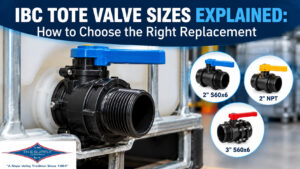
For a more detailed explanation of complete valve selection, see our companion guide, IBC Tote Valve Sizes Explained: How to Choose the Right Replacement .
Find IBC Tote Valves and Accessories at R&S Supply Company
At R&S Supply Company, we understand how important dependable liquid-handling equipment is to everyday operations.
Whether you're working in a winery, agricultural operation, food processing facility, or industrial environment, having the correct valve accessories can help minimize connection problems and unnecessary downtime.
Our product selection includes IBC tote valves with different discharge connection options, adapters, and related accessories. The correct assembly still needs to be verified for the particular container.
Frequently Asked Questions About Leaking IBC Tote Valves
Why is my IBC tote valve leaking when it's closed?
The valve's internal seat may be damaged, contaminated, or worn. If liquid is passing through the closed valve, arrange an assessment using the manufacturer's approved procedures.
Can I replace the gasket on an IBC tote valve?
Some removable outlet caps and adapters use replaceable gaskets. Confirm the correct size, material, and manufacturer's instructions. Internal valve seals or factory-installed assemblies may require qualified service.
How do I stop an IBC tote outlet cap from leaking?
Once it is safe to inspect the connection, check that the cap threads match the outlet, the gasket is correctly seated, and the sealing surfaces are undamaged. Replace incompatible or damaged accessories with approved parts.
Can I use thread seal tape on an IBC valve?
Only where the connection manufacturer specifies it. Many IBC buttress-thread connections use gaskets rather than thread tape. Tape is not a substitute for a damaged gasket or mismatched threads.
How do I know if my IBC valve is damaged?
Visible cracks, stem leakage, damaged threads, difficult operation, or liquid passing through a closed valve can indicate a problem. Stop using a suspected damaged assembly until it has been evaluated.
Are IBC tote valve gaskets universal?
No. Gaskets vary in diameter, thickness, shape, and material. They must match the connection and be compatible with the stored liquid.
Can I replace an IBC tote valve myself?
Do not assume that a factory-installed valve is user-replaceable. Follow the container manufacturer's instructions. Some manufacturers require qualified IBC reconditioners to perform valve replacement.
What should I do if an IBC containing chemicals starts leaking?
Keep untrained personnel away, follow your facility's spill response procedures, and consult the chemical's safety data sheet. Qualified responders should assess containment, protective equipment, and cleanup requirements.
Final Thoughts: Fix the Source of the Leak, Not Just the Symptom
A leaking IBC tote valve doesn't always mean the entire valve needs replacing.
The problem may be as simple as an incorrectly fitted adapter or a worn outlet gasket. But cracks, internal valve damage, and leakage around the tank-side connection deserve more careful attention.
The best approach is to identify the exact source of the leak, confirm the component specifications, and follow the manufacturer's instructions before making changes.
With the right information and compatible replacement accessories, many connection-related problems can be addressed without unnecessary purchases.
For IBC tote valves, adapters, and liquid-handling accessories, visit R&S Supply Company .
Authoritative Sources and Further Reading
- Mauser Packaging Solutions. IBC Closing Instructions. Manufacturer guidance on factory-installed valves, closure procedures, and approved replacement requirements. View PDF .
- Occupational Safety and Health Administration (OSHA). Hazard Communication and Safety Data Sheet guidance. OSHA Hazard Communication .
- OSHA. Warehousing Hazards and Solutions. Workplace safety information related to handling materials and spills. Read OSHA guidance .
- U.S. Department of Transportation. 49 CFR Part 178, Subpart N. Requirements applicable to the design and construction of IBCs. View regulations .
- R&S Supply Company. How to Identify the Threads on Your IBC Tote Valve. Read the guide .